
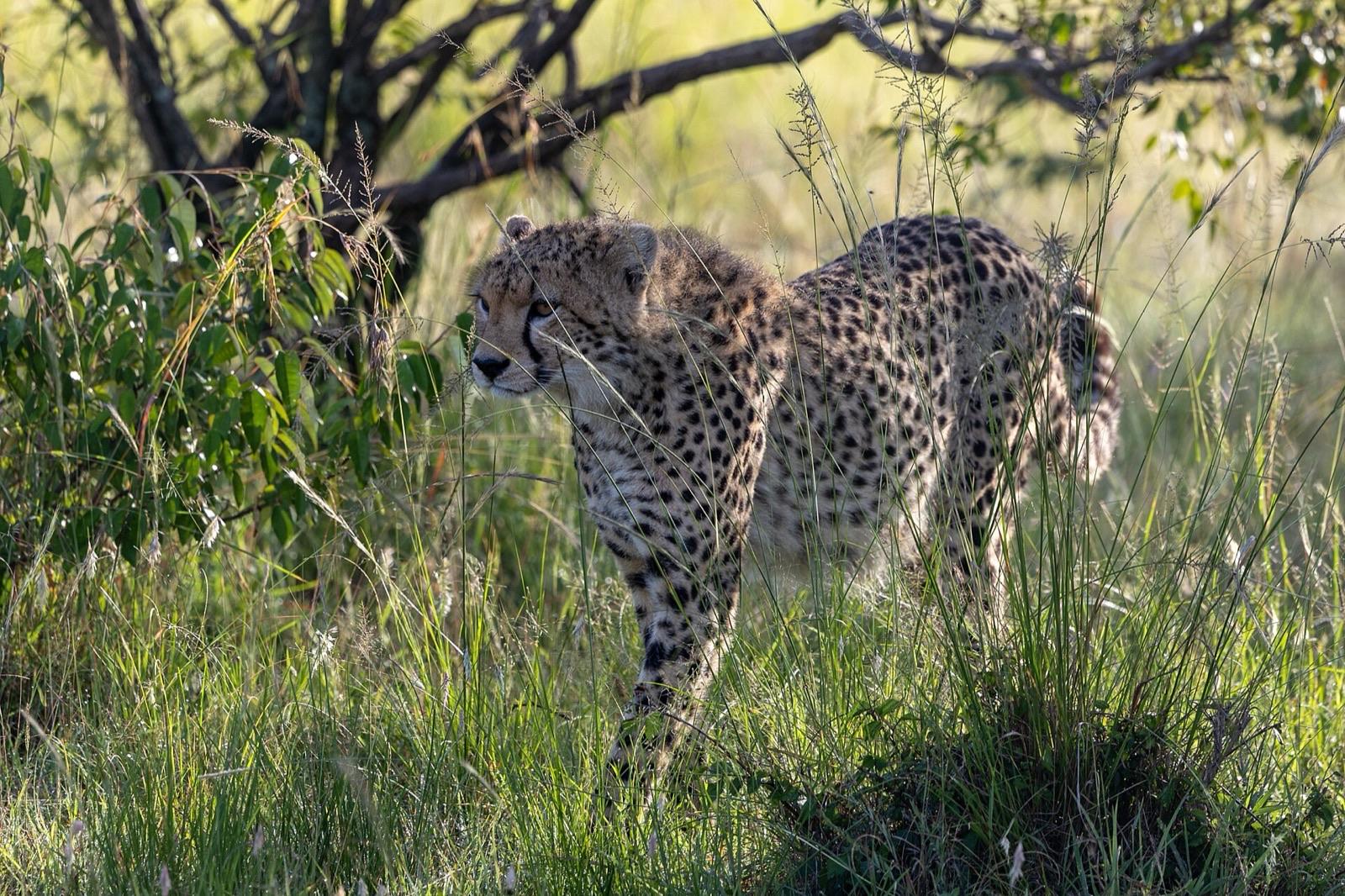
Photo: Hobbyfotowiki · CC0
Masai Mara
Grands félins, ciels immenses et le théâtre nord de la migration.
Comment s'y rendre
Kenya
Durée suggérée
3 à 4 nuits, souvent avec la côte kenyane ou la Tanzanie
À partir de
USD 450
Idéal pour
Passionnés de grands félins et photographes
Le Mara, c'est le pays des grands félins. Ses prairies ouvertes et la facilité d'observation en font l'un des endroits les plus fiables d'Afrique pour voir des lions chasser, des guépards sprinter et des léopards drapés sur les branches des figuiers — souvent à courte distance du camp.
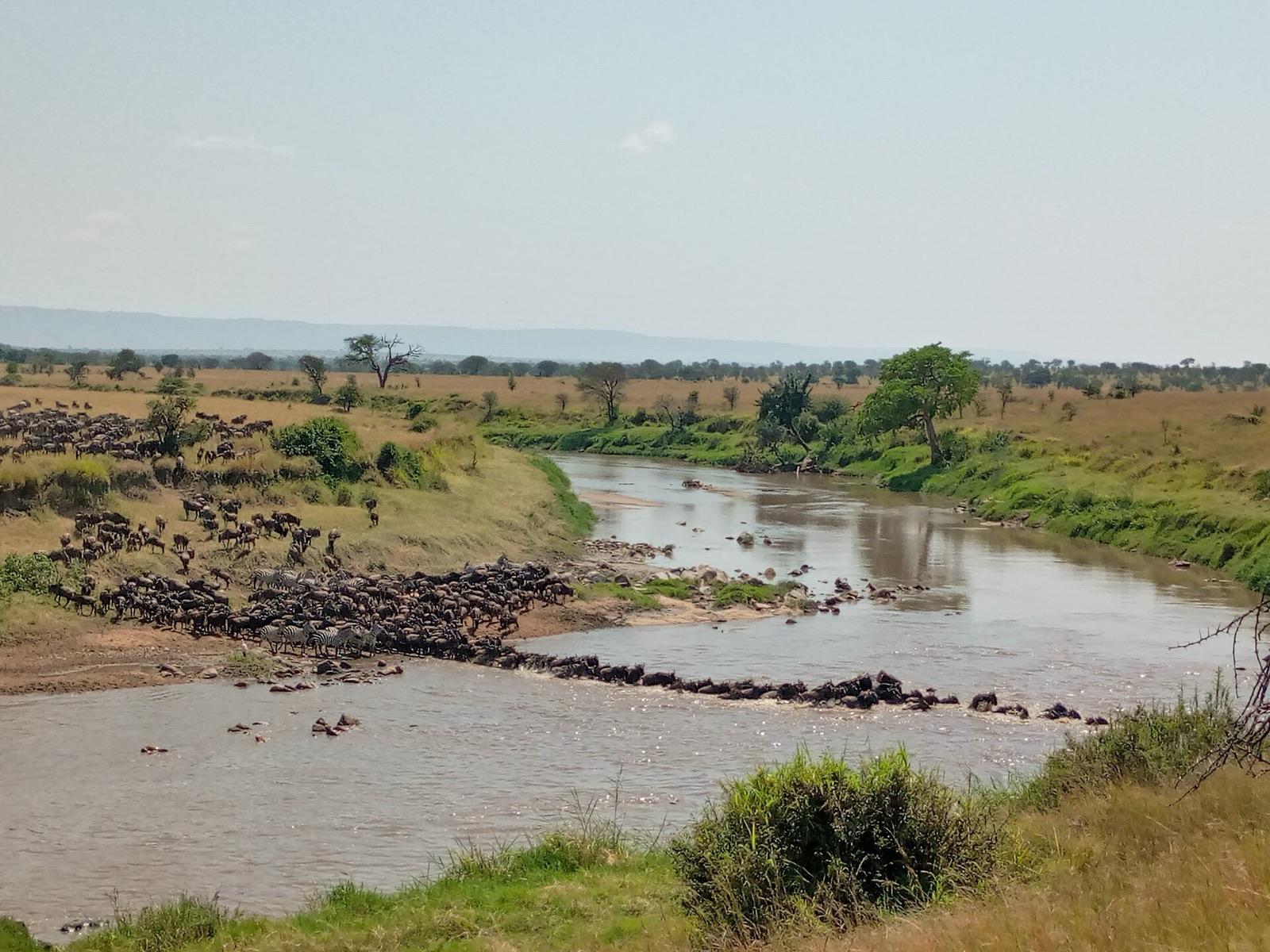
De juillet à octobre environ, la migration des gnous déborde vers le nord depuis le Serengeti, et les traversées de la rivière Mara — poussière, panique et crocodiles — sont le grand spectacle de la saison. Hors de ces mois, la faune résidente est superbe en soi.
Nous privilégions les concessions privées qui bordent la réserve : moins de véhicules, accès hors-piste, sorties de nuit et marches, et un modèle qui reverse directement les revenus du tourisme aux propriétaires fonciers maasaï.
Points forts
- Observation exceptionnelle de lions, guépards et léopards
- Les traversées de la rivière Mara (juil.-oct.)
- Concessions privées avec hors-piste et sorties de nuit
- Rencontres culturelles maasaï authentiques
- Safaris en montgolfière au-dessus des plaines
Quand partir
Migration
Juil. – Oct.Les troupeaux et les traversées de rivière ; la saison la plus animée et la plus spectaculaire du Mara.
Saison verte
Nov. – JuinGrands félins résidents, nouveau-nés et oiseaux migrateurs à tarifs plus bas, avec de courtes pluies vers novembre et avril.
Comment s'y rendre
Vol via Johannesburg ou en direct vers Nairobi (NBO), puis un court vol en avion léger jusqu'aux pistes du Mara. Nous organisons la correspondance et la concession la plus adaptée.
Bon à savoir
More in Across Africa
Créons quelque chose d'honnête et d'inoubliable.
Dites-nous qui voyage et ce dont vous rêvez. Nous reviendrons avec un projet réfléchi et au prix transparent — sans pression, sans jargon.